
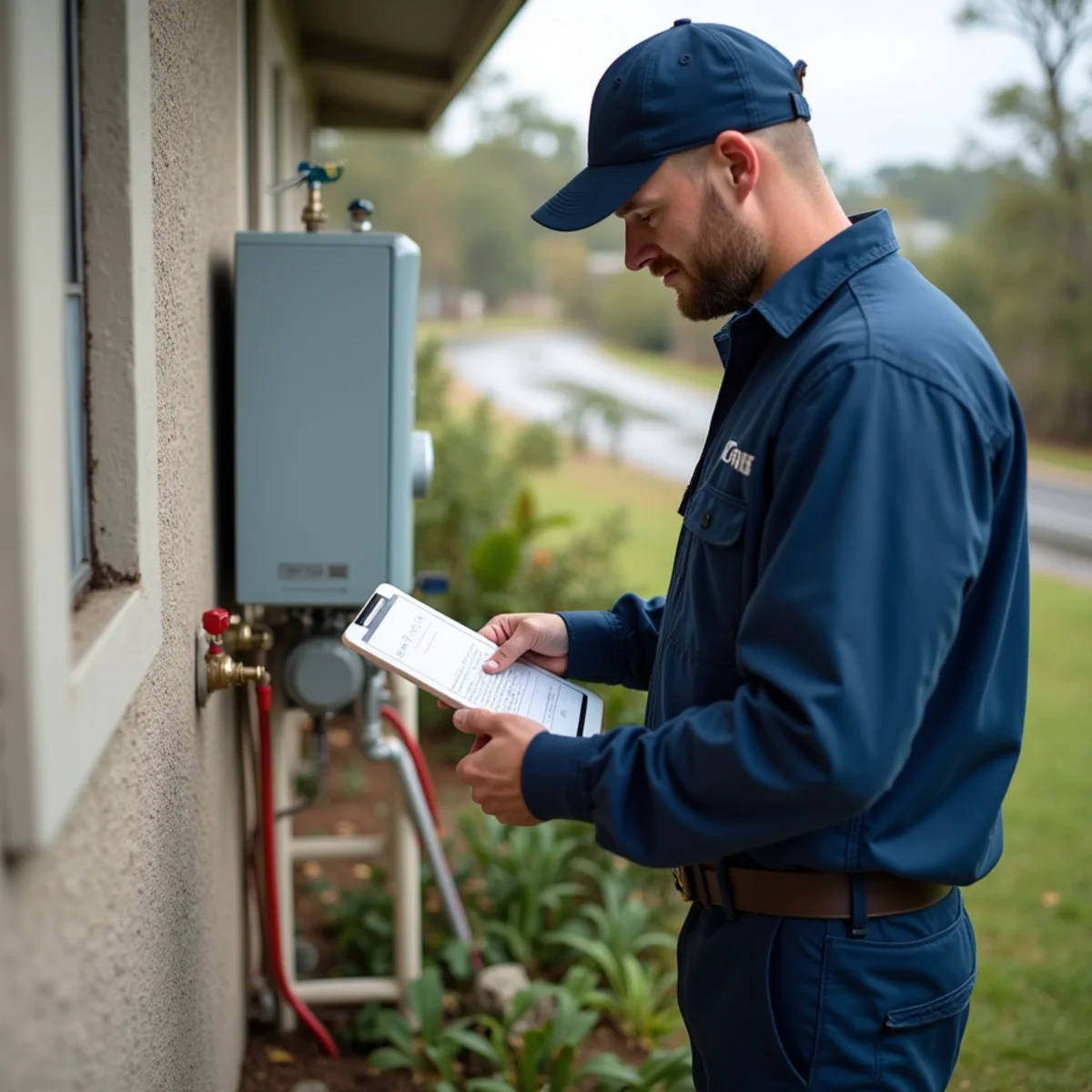
Post-Storm Plumbing Inspection: What to Check After a Gulf Hurricane
After a Gulf hurricane passes, the emergency is not over. Post-storm plumbing failures cause a significant portion of downstream damage.
1. Do NOT Turn Gas Back On Yourself
If the gas was shut off during the storm, do not turn it back on. Wait for a licensed plumber to inspect first.
2. Inspect the Water Heater Before Relighting
Check for evidence of flood contact around the base of the water heater. If the burner assembly or gas valve was submerged, the unit must be replaced.
3. Look for Wet Spots and Sagging Ceilings
Walk every room and look for wet drywall, discolored ceilings, or musty smells that mean a supply line failed inside a wall.
4. Test Every Faucet and Every Drain
Turn each faucet on for 30 seconds and confirm normal pressure. Flush each toilet and confirm normal drain speed.
5. Camera-Inspect the Sewer Lateral
If your yard or neighborhood flooded, silt intrusion into the sewer lateral is likely.
What "Sediment in the Line" Actually Looks Like After a Storm
The most-missed post-storm plumbing problem in Friendswood is silt intrusion into the sewer lateral. When floodwater rises around a clay-tile joint or an offset clay lateral, sand and silt get carried in with the groundwater. It settles at the low points in the pipe. For weeks or months afterward, the line still drains — until enough new material builds up and finally chokes at the sand pile. That is the "our sewer backed up three weeks after the storm" call we take dozens of times after every named event.
The Gas System Check That CenterPoint Doesn't Do
When CenterPoint restores gas after a storm outage, they check the meter and the exterior service line. They do not pressure-test your interior gas piping. If a tree fell on your outdoor grill hookup or a gas water heater got tilted by flood movement, small leaks can develop and CenterPoint's check will not catch them. Our post-storm gas system pressure test uses an electronic combustible-gas detector at every joint and appliance connection — takes about 45 minutes and catches problems before they become an ignition-source emergency.
Schedule the 5-Point Inspection
Call (831) 290-4327 for a 5-point post-storm plumbing inspection. Sewer camera, gas leak test, water heater assessment, mainline flush, and whole-house pressure test — with a written report you can submit to your insurance carrier. Flat rate, fully documented.
The Insurance-Ready Documentation Package We Deliver
Every post-storm inspection package we complete for a Friendswood home produces a documentation set your insurance adjuster can act on directly. It includes: dated photographs of the water heater condition (with model and serial numbers legible), photographs of any gas-appliance condition changes, a written pressure-test report with numbers and pass/fail notes, sewer camera video (delivered on USB or via a private link), a written scope of any repairs recommended, and — critically — a plain-language cover letter that explains what we found and what we recommend in adjuster-friendly terms. This package moves claims faster and reduces the back-and-forth that turns simple losses into month-long paperwork projects.
What Neighborhood-Level Damage Patterns Tell You About Your Own Home
After every major storm event in Friendswood, we track which neighborhoods produce the highest concentration of specific plumbing damage. That pattern data lets us tell a Pearland homeowner: 'In Shadow Creek, we're seeing a pattern of gas water heater burner failures; in Old Town Pearland, we're seeing sewer silt intrusion; in Silverlake, we're seeing frozen-condition PEX failures.' If you know your neighborhood is showing a specific damage pattern this season, you can prioritize which inspection element matters most for your address. Call the office and ask what we're seeing in your specific neighborhood right now — we share that intelligence with anyone who asks.