
Why Friendswood Expansive Clay Soil Causes So Many Slab Leaks
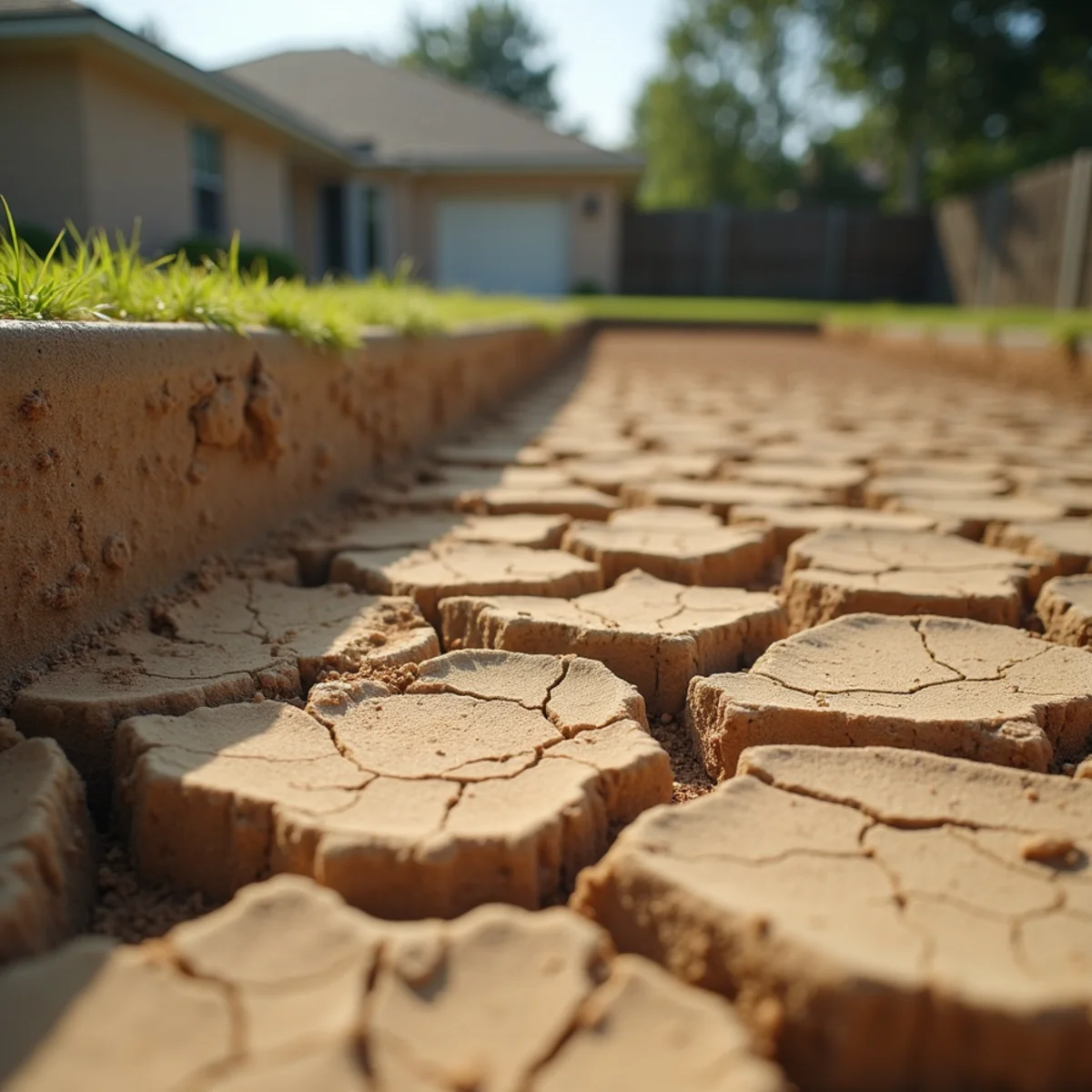
The soil under your Friendswood home is not just dirt. It is Beaumont clay — a Gulf Coast expansive clay with a plasticity index between 30 and 50. In our climate, the dry summer / wet fall cycle can produce 4 to 6 inches of vertical soil movement seasonally. Your slab moves with it. And every copper hot-water line running under that slab flexes just enough, every year, to eventually work-harden and fail.
The Clay Physics, Briefly
Beaumont clay swells when saturated and shrinks when dry. A single 3-inch October rain event can raise the ground under your slab by more than an inch in 48 hours. A dry August can pull it back down 2 to 3 inches over a month.
Why 1970s Friendswood Homes Are the Sweet Spot
The building boom in Friendswood, Pearland, Alvin, and older Sugar Land ran from roughly 1968 through 1985. Nearly every home from that era was built on a post-tension slab with soft copper hot-water lines run directly under the concrete.
Signs You Have a Slab Leak Right Now
- Your water bill jumped with no lifestyle change.
- You hear water running when nothing is turned on.
- A patch of floor tile feels unusually warm.
- Carpet in one specific area is damp with no obvious cause.
- The water heater cycles on more often than it used to.
Your Three Real Options
Option 1: Spot Repair
If you have one leak and the rest of the copper is still in good shape, we open a small area of slab and repair with a permanent copper or PEX splice. Typical cost in Friendswood: $1,500 to $3,200 all-in.
Option 2: Overhead Re-Route
When the leaked line is a critical hot-water run and we do not want to break your tile, we abandon the failed line under the slab and route a new PEX-A line overhead through the attic.
Option 3: Full PEX Repipe
If you have had one slab leak already, statistically you will likely see another within 3 to 5 years. Typical cost: $4,800 to $9,200.
How to Tell a Slab Leak From a Foundation Problem
Because Beaumont clay moves so much, Friendswood homeowners often see foundation symptoms — cracked drywall, sticking doors, uneven floors — and assume the plumbing is the cause. It often is not. A true slab leak produces its own signature: a jump in the water bill without lifestyle change, the sound of running water when nothing is on, a warm spot on the floor tile, or damp carpet in a specific area. If you have foundation movement without those water-related signals, the answer is usually a foundation contractor, not a plumber.
What a Proper Slab Leak Diagnosis Looks Like
When we suspect a slab leak in a Friendswood home, we do not open concrete until we have confirmed the leak location within a foot or two. That means pressure isolation to prove the leak is on the supply side (not a drain), acoustic listening equipment to pinpoint the exact spot, and often thermal imaging or tracer gas as a second confirmation. Only then do we discuss whether to break the slab for a spot repair, re-route the failed line overhead through the attic in new PEX-A, or price out a full whole-house repipe when multiple failures are stacking up.
When Repiping Actually Makes Financial Sense
For most 1970s Friendswood homes that have already had one confirmed slab leak, the second one usually shows up within three to five years. A whole-house PEX-A repipe through the attic — priced typically between $4,800 and $9,200 for a 2,000 to 2,800 square foot home — abandons every failing under-slab copper line, adds a 25-year manufacturer pipe warranty, and eliminates the cycle of $1,500 to $3,200 spot repairs. If you are on your second slab leak, ask us to run the numbers side by side before you authorize another spot fix.
What the Soil Report on Your Friendswood Home Actually Tells You
If you have your original home builder's soil report — often filed with the county at time of construction, or available through your builder if the home was built after 2000 — it will list the plasticity index (PI) of the site's clay. Friendswood PI values commonly run 30 to 50, which is high enough to justify serious foundation and plumbing considerations. What the report doesn't tell you is what has happened to that soil since the drought years of 2011 and 2022, both of which desiccated the clay and stressed slabs across the region. If your home sat through those cycles without a slab leak already, its plumbing was likely well-installed; if a leak has now appeared, it's typically the delayed consequence of that historical stress rather than a sudden pipe failure.